Technology and the Hyperlocal Economy: A More Sustainable Way to Make Things
Matt Saunders, June 2026
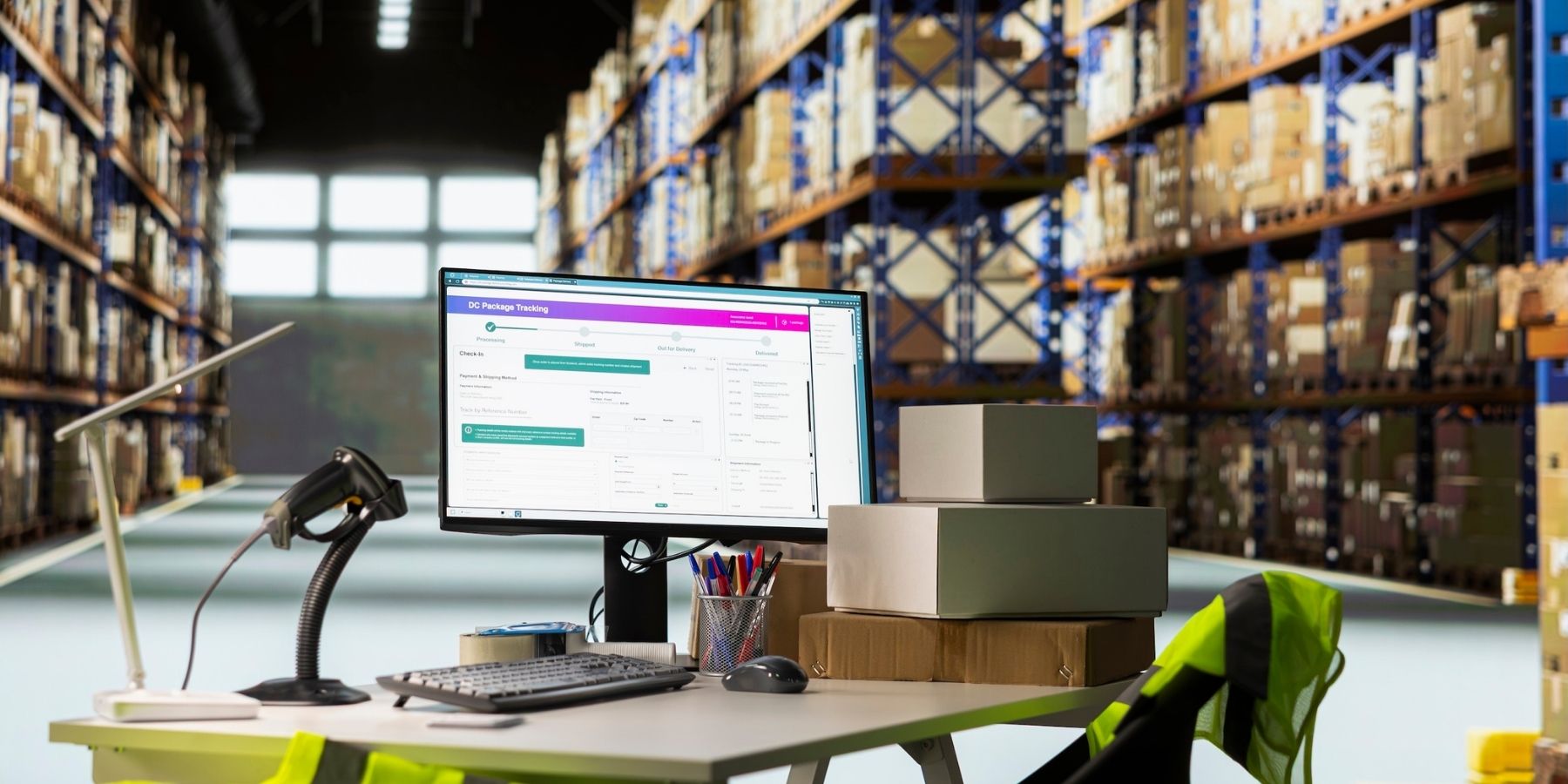
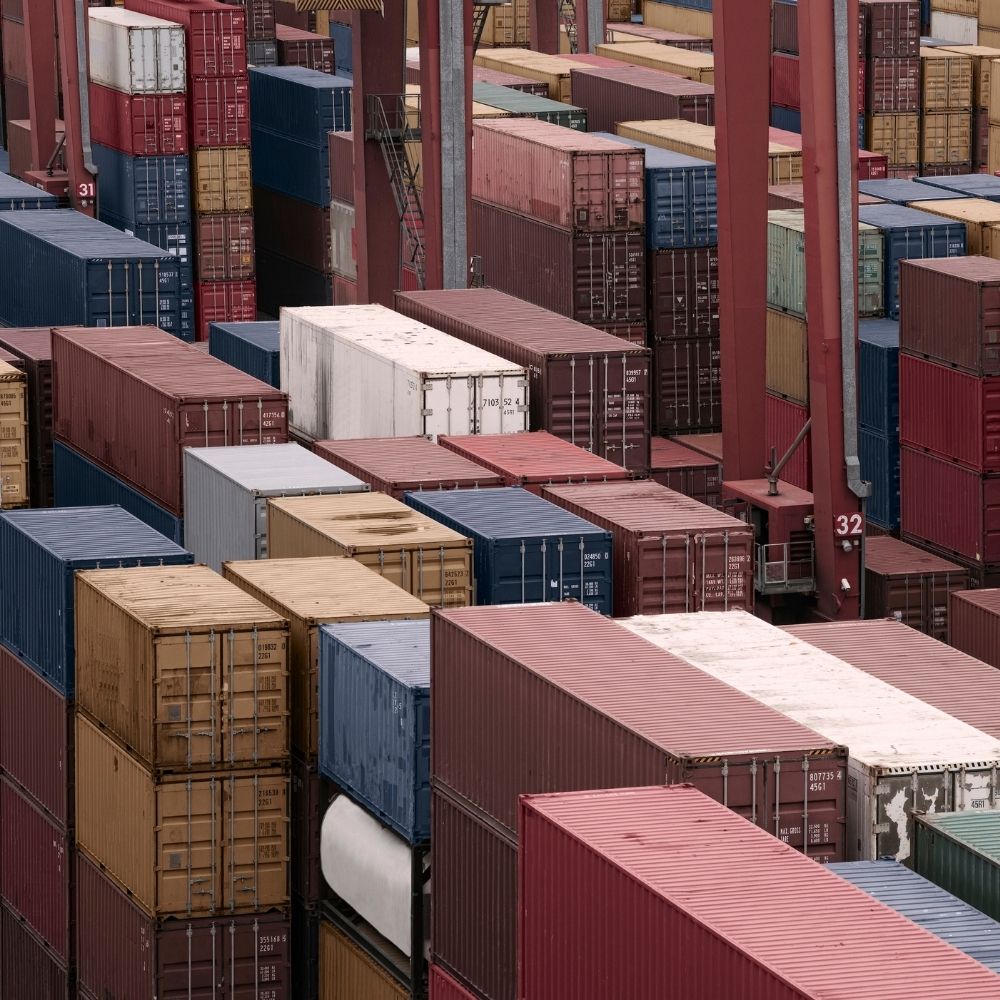
Picture the supply chain behind a typical product you ordered on Amazon last week. It was probably designed somewhere in the US or Europe, manufactured in China or Southeast Asia, packed into a container ship, sailed across an ocean, cleared customs, trucked to a fulfillment warehouse, repacked, and then driven to your door. That product may have sat in a warehouse for months before you ordered it — burning capital, occupying space, and emitting carbon the entire time.
Now ask: does any of that actually need to happen?
The problem hiding in plain sight
The economics of speculative inventory are brutal, and mostly invisible to the end consumer.
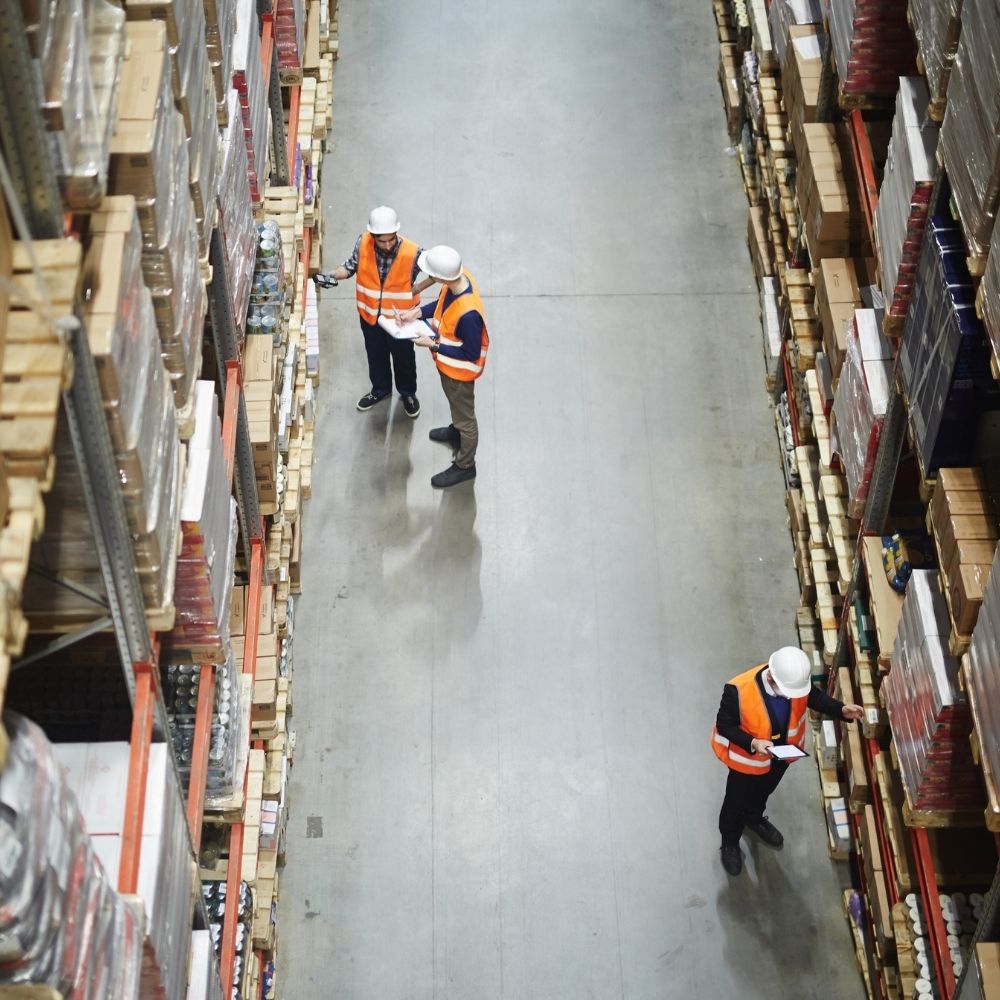
Carrying costs for excess inventory run 20–30% of inventory value annually — before you factor in Amazon FBA storage fees, which compound sharply for slow-moving items. Zoom out to the full retail picture and the numbers are staggering: inventory distortion — the combined cost of overstock and stockouts — cost retailers $1.77 trillion globally in 2023, equivalent to 7.2% of all retail sales. Nearly two trillion dollars of value, destroyed every year, because we’re guessing at demand instead of responding to it.
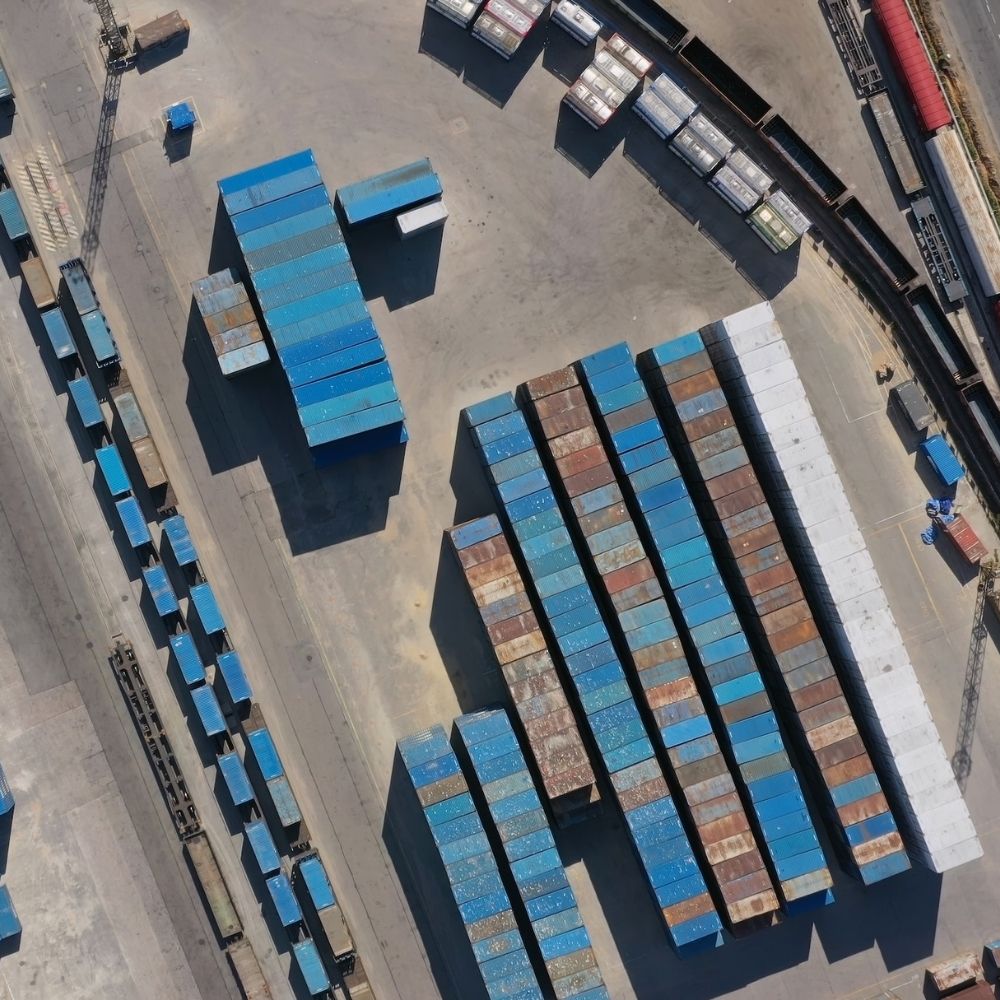
And that’s before you count the carbon. Freight shipping is responsible for roughly 2.1 billion tons of CO₂ annually — about 7% of global emissions — and demand is expected to nearly quadruple by 2050 at current trajectory. A plastic widget traveling 8,000 miles to sit in a warehouse for six months is a small tragedy of resource allocation, replicated hundreds of millions of times a year.
The bottleneck isn’t technology. It’s imagination.
The pieces are already on the table
Three things are happening simultaneously that make a very different model possible:
3D printing has crossed a production threshold. The global additive manufacturing market hit roughly $25 billion in 2025 and is growing at a 20%+ CAGR toward a projected $150B+ by 2034. More importantly, the conversation in the industry has fundamentally shifted — from “what’s possible” to “what’s repeatable.” Manufacturers are achieving tighter tolerances, higher consistency, and more predictable economics for low-to-medium volume production. Companies like Würth Additive Group are already building distributed manufacturing networks that allow qualified parts to be sourced on demand. Invisalign produces millions of unique parts daily. The capability is real. And the input materials are no longer just plastics. Additive manufacturing now spans metals, ceramics, and a growing range of bio-based and sustainable polymers — meaning the environmental story isn’t just about eliminating unnecessary shipping, it’s also about producing goods from better materials in the first place.
AI is collapsing the cost of design. This is the part most people underestimate. Generative AI can now produce printable 3D designs from a text description or a photo in minutes. Amazon has already found that customers are twice as likely to purchase after interacting with a 3D product visualization. That’s just the front end. The deeper opportunity is on the supply side: AI doesn’t just visualize existing products, it can generate new ones. The catalog of a distributed print-on-demand marketplace isn’t limited to what’s been designed and manufactured — it’s limited only by what can be described and validated.
The infrastructure for distributed manufacturing is being built. The convergence of additive manufacturing with robotics, AI, and cloud-based production platforms is enabling something genuinely new: manufacturing that can live close to the consumer, activated by demand rather than anticipating it. Entry-level 3D printers shipped over one million units in a single quarter in 2025. The hardware is proliferating. What’s missing is the system that ties it together.
Imagine a different kind of online marketplace
Here’s the model I keep coming back to — and I want to be specific about what it looks like, because I think the vision gets undersold when it’s described abstractly.
You open an app or visit an online marketplace. You browse not a catalog of physical goods sitting in warehouses, but an online catalog of validated, printable designs — some created by independent designers, some generated on the spot by AI from your own description. You find what you want, or describe what you want, and place an order. Within hours, a print node ten miles away receives the file and produces your item. A courier picks it up and delivers it to your door, packaged in minimal, right-sized material designed for a five-mile journey, not a transoceanic one.
The item didn’t exist before you ordered it. No factory retooled for it. No container ship carried it. No warehouse stored it for eight months while someone hoped it would sell.
That’s not science fiction. Every component of that system exists today. What doesn’t exist yet is the orchestration layer — the software, standards, and network design that ties print capacity,
Imagine a different kind of online marketplace
Here’s the model I keep coming back to — and I want to be specific about what it looks like, because I think the vision gets undersold when it’s described abstractly.
You open an app or visit an online marketplace. You browse not a catalog of physical goods sitting in warehouses, but an online catalog of validated, printable designs — some created by independent designers, some generated on the spot by AI from your own description. You find what you want, or describe what you want, and place an order. Within hours, a print node ten miles away receives the file and produces your item. A courier picks it up and delivers it to your door, packaged in minimal, right-sized material designed for a five-mile journey, not a transoceanic one.
The item didn’t exist before you ordered it. No factory retooled for it. No container ship carried it. No warehouse stored it for eight months while someone hoped it would sell.
That’s not science fiction. Every component of that system exists today. What doesn’t exist yet is the orchestration layer — the software, standards, and network design that ties print capacity, design validation, demand signals, and last-mile logistics into a seamless experience. And critically, this isn’t a solution for everything. Complex electronics, precision components, textiles — many categories will remain in traditional supply chains for a long time. But for a meaningful slice of the everyday goods that move across oceans today, the case for a local, on-demand alternative is becoming hard to argue with.
The sustainability math is compelling on every axis — less waste because nothing is made that isn’t sold, less capital tied up in inventory that may never move, less packaging because a locally printed item needs protection for a five-mile trip not a 8,000-mile one, and dramatically less carbon because a print node in New Jersey serving the Northeast eliminates most of the emissions associated with ocean freight, port handling, and long-haul trucking.
And the design surface expands dramatically. AI-generated design means the catalog isn’t a static list of SKUs — it’s a generative space. Want a phone case in a specific color, with a specific texture, sized for a model that launched last week? That’s a prompt, not a product line. The universe of purchasable objects grows by orders of magnitude, and none of it requires a factory in Guangzhou to retool.
design validation, demand signals, and last-mile logistics into a seamless experience. And critically, this isn’t a solution for everything. Complex electronics, precision components, textiles — many categories will remain in traditional supply chains for a long time. But for a meaningful slice of the everyday goods that move across oceans today, the case for a local, on-demand alternative is becoming hard to argue with.
The sustainability math is compelling on every axis — less waste because nothing is made that isn’t sold, less capital tied up in inventory that may never move, less packaging because a locally printed item needs protection for a five-mile trip not a 8,000-mile one, and dramatically less carbon because a print node in New Jersey serving the Northeast eliminates most of the emissions associated with ocean freight, port handling, and long-haul trucking.
And the design surface expands dramatically. AI-generated design means the catalog isn’t a static list of SKUs — it’s a generative space. Want a phone case in a specific color, with a specific texture, sized for a model that launched last week? That’s a prompt, not a product line. The universe of purchasable objects grows by orders of magnitude, and none of it requires a factory in Guangzhou to retool.
Why this matters to NEV
We invest at the intersection of packaging, materials, and supply chain — which means we sit exactly at the point where this shift is most consequential.
The move to on-demand local manufacturing doesn’t eliminate packaging. It transforms it. The packaging required for last-mile delivery of a locally printed product is a completely different design problem than the packaging required to protect high-value goods across a 14,000-mile ocean journey. It’s an opportunity for better materials, more circular systems, and smarter design — not less packaging, but right-sized packaging.
And the software that orchestrates this — the platforms that manage distributed print networks, validate designs for printability, connect demand signals to production nodes, and close the loop on materials and waste — that’s the kind of infrastructure investment that looks like software but is, at its core, a bet on how physical goods move through the world.
The tools exist. The question is who assembles them.