
What is PHA, and why are we watching it?
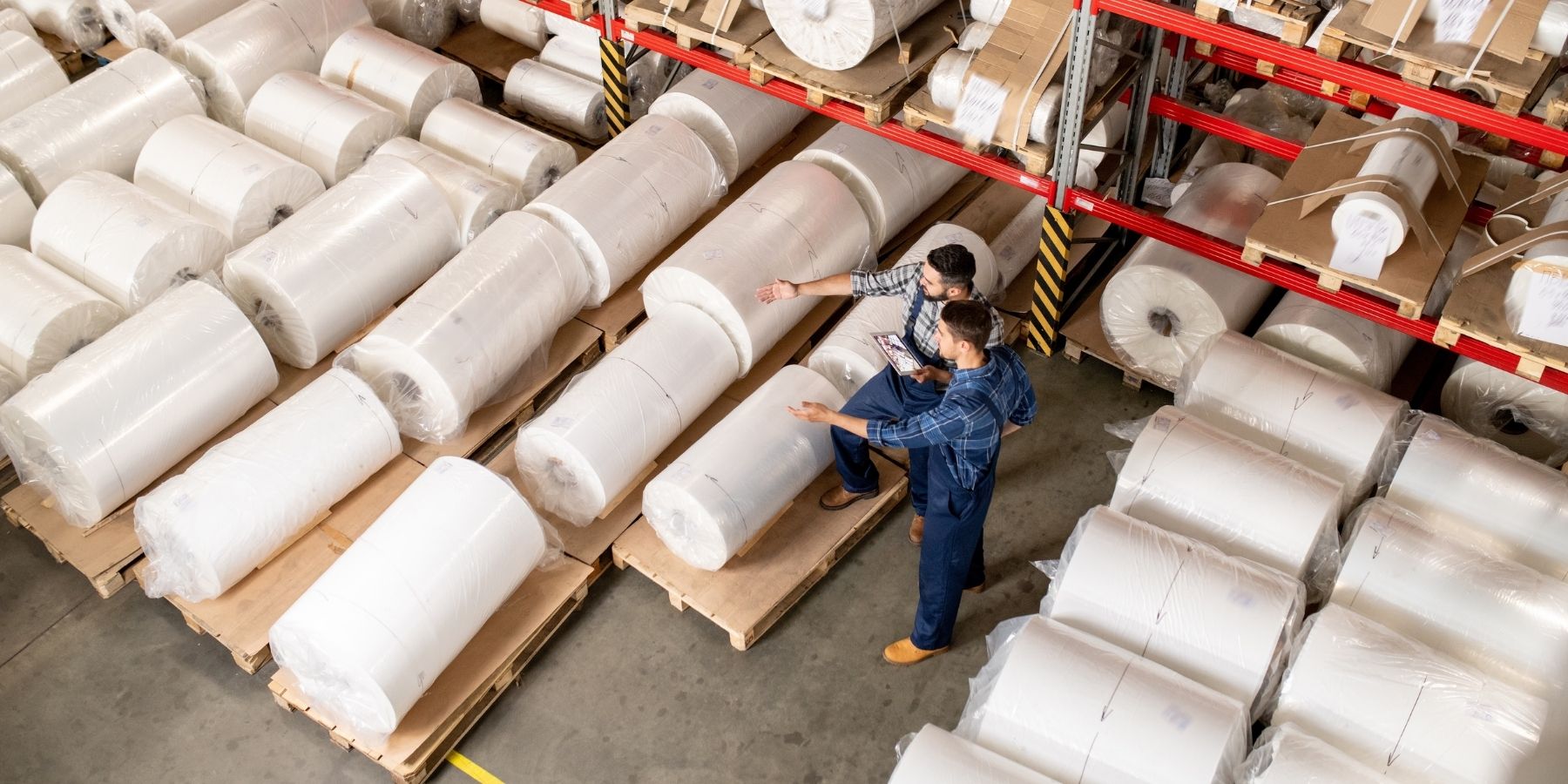
Brands feel the pressure to cut their environmental footprint, especially in products like wrappers and pouches that often end up as litter instead of getting recycled, but the companies that make and convert packaging won’t accept a material that slows down their lines or costs too much. That leaves a small but real opportunity for materials that solve the end-of-life problem without forcing factories to change how they work.
Polyhydroxyalkanoates (PHAs) are often pitched as the answer. They can be, but only if they clear a few tough hurdles first.
PHAs are a family of biobased polyesters produced through microbial fermentation that uniquely combine renewable sourcing with the ability to rapidly biodegrade across multiple environments. This attribute becomes most relevant in packaging applications prone to leakage beyond managed waste systems such as single-use sachets and pouches, food wrappers and flexible films, tea bags, and coffee capsules.
The problem is that packaging is also where weak materials get exposed quickly. Converters will not accept a resin that runs inconsistently, narrows operating windows, or spikes scrap rates. Brand owners will not tolerate unreliable supply or food-contact uncertainty. And no one in packaging is sentimental about “green” if the cost delta is too large.
So the investable thesis for PHA is not a broad, near-term replacement of PE / PP. It is a staged commercial strategy: win niches where end-of-life attributes are priced in, then methodically drive cost-down and processing reliability until larger packaging volumes become plausible.
That staged approach implies a different investing posture. The value is less likely to accrue to “the PHA market”, and more likely to accrue to teams that can remove the historical structural blockers to cost parity: operational expenses (feedstock, fermentation productivity, recovery/purification) and customer value generation (formulation). These teams need to execute on these while building credible, replicable industrial operations.
Gate 1: Cost parity (the primary constraint)
What drives cost today?
PHA economics are constrained by four interacting factors: feedstock, fermentation productivity, downstream recovery/purification, and scale execution (capex + uptime). Even when feedstocks appear “cheap,” variability inevitably cascades into lower yields, more off-spec material, and higher purification burden, often negating the apparent advantage.
What must improve to approach commodity-adjacent economics:
1. Feedstock strategy that is inexpensive and consistent
- The winning model will likely require a narrowly specified, contractable carbon source (industrial byproducts or defined waste fractions) that does not destabilize process yield and product quality.
2. High, stable fermentation productivity
- Commercial parity depends on sustained high volumetric productivity and predictable operation (contamination control, oxygen transfer, stable high-cell-density runs). This is as much operations engineering as it is strain selection.
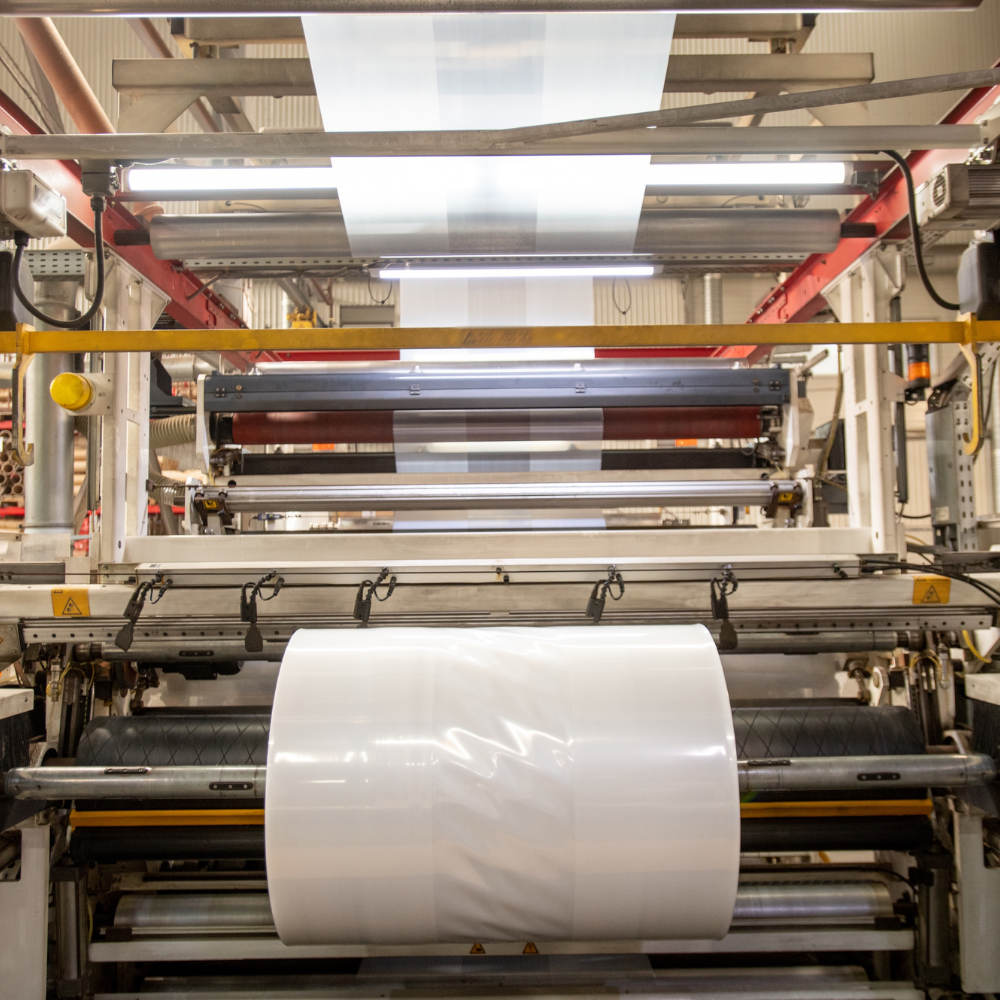
3. Simplified, lower-cost recovery and purification
- Downstream recovery is frequently the cost and quality bottleneck. If the process relies on complex solvent systems, extensive polishing, or repeated steps to control odor/taint and residuals, costs will remain structurally high and quality risk persists.
4. Operational uptime and replication
- The sector has repeatedly shown that a large addressable market does not compensate for weak unit economics or fragile operations. Demonstrating multi-month stability at meaningful scale and the ability to replicate plants matters more than peak pilot metrics.
Diligence expectations on cost
- Documented plant uptime, yields, and variability over extended runs (not best-week performance).
- A credible plan to reduce recovery complexity while tightening impurity/odor control.
- Evidence that cost reduction is driven by process learning and simplification—not dependence on enduring “green premiums.”
What Gate 1 really implies is that the “PHA winner” is likely to look less like a materials story and more like an industrial-biotech operating company. The easiest way to get misled in this space is to confuse pilot success with commercial economics. At scale, the winners will be those who can make the process boring: stable inputs, stable fermentation, simple recovery, consistent pellets, and predictable margins.
Gate 2: Performance and conversion parity (the adoption constraint)
Even if resin cost declines, packaging adoption will fail if converters cannot run PHA reliably on existing assets at competitive throughput and scrap rates.
Key performance and processing hurdles to solve
1. Thermal processing window and degradation sensitivity
- Many PHA grades can be sensitive near typical melt-processing conditions, increasing risk of degradation, gels, odor formation, and lot-to-lot inconsistency unless stabilized and tightly controlled.
2. Mechanical balance (toughness vs stiffness)
- Not all PHAs are the same. Some compositions can be stiff/brittle; improving toughness often requires copolymer design, blending, and additive packages that may raise cost and complicate certification and regulatory pathways.
3. Natural crystallization behavior affects processing speed
Imagine a different kind of online marketplace
Here’s the model I keep coming back to — and I want to be specific about what it looks like, because I think the vision gets undersold when it’s described abstractly.
You open an app or visit an online marketplace. You browse not a catalog of physical goods sitting in warehouses, but an online catalog of validated, printable designs — some created by independent designers, some generated on the spot by AI from your own description. You find what you want, or describe what you want, and place an order. Within hours, a print node ten miles away receives the file and produces your item. A courier picks it up and delivers it to your door, packaged in minimal, right-sized material designed for a five-mile journey, not a transoceanic one.
The item didn’t exist before you ordered it. No factory retooled for it. No container ship carried it. No warehouse stored it for eight months while someone hoped it would sell.
That’s not science fiction. Every component of that system exists today. What doesn’t exist yet is the orchestration layer — the software, standards, and network design that ties print capacity, design validation, demand signals, and last-mile logistics into a seamless experience. And critically, this isn’t a solution for everything. Complex electronics, precision components, textiles — many categories will remain in traditional supply chains for a long time. But for a meaningful slice of the everyday goods that move across oceans today, the case for a local, on-demand alternative is becoming hard to argue with.
The sustainability math is compelling on every axis — less waste because nothing is made that isn’t sold, less capital tied up in inventory that may never move, less packaging because a locally printed item needs protection for a five-mile trip not a 8,000-mile one, and dramatically less carbon because a print node in New Jersey serving the Northeast eliminates most of the emissions associated with ocean freight, port handling, and long-haul trucking.
And the design surface expands dramatically. AI-generated design means the catalog isn’t a static list of SKUs — it’s a generative space. Want a phone case in a specific color, with a specific texture, sized for a model that launched last week? That’s a prompt, not a product line. The universe of purchasable objects grows by orders of magnitude, and none of it requires a factory in Guangzhou to retool.
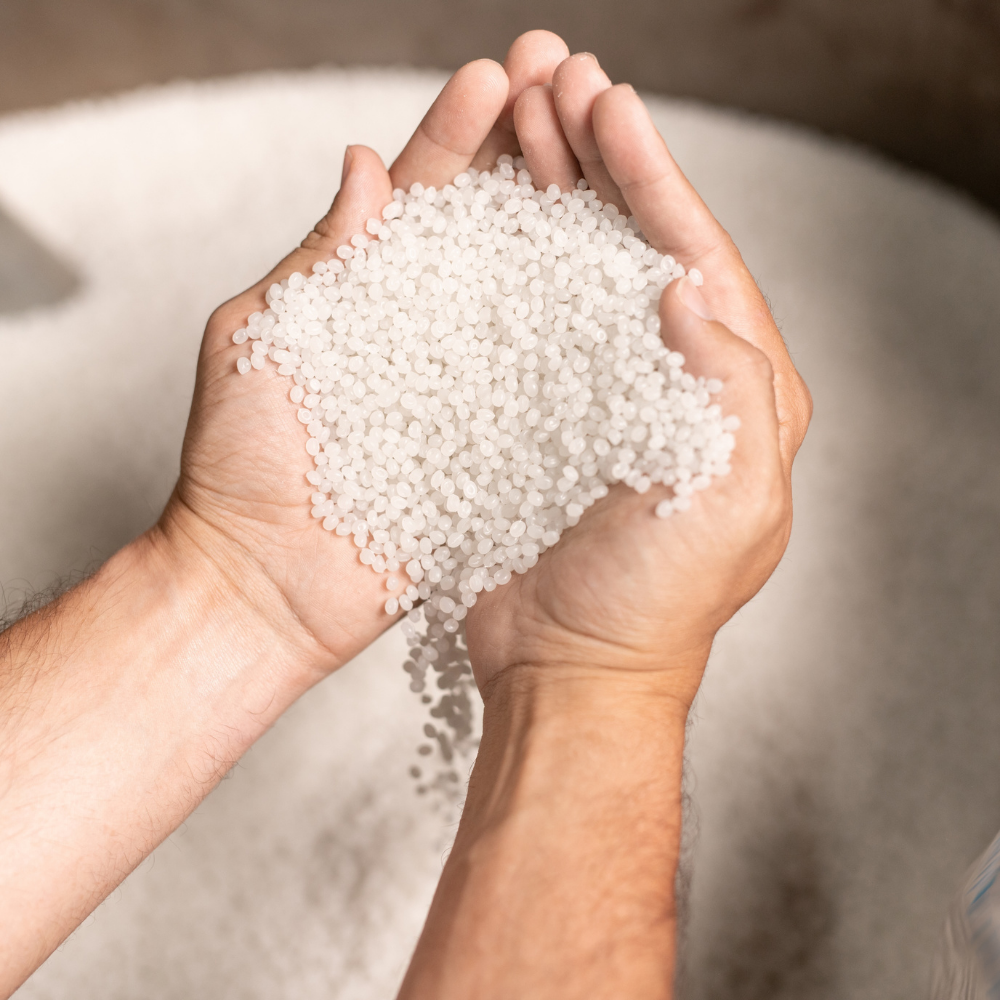
- PHA will crystallize as it cools. This is a inherent property of the material, not something a converter can readily dial in or out. How quickly and consistently that crystallization happens will set the pace a line can run at, from extrusion through thermoforming and molding. Because it’s an intrinsic material trait, resin producers have to actively manage it (through a combination of formulation and process) to get the same reliable cycle time run after run.
4. Packaging-specific specification stack
- Packaging is defined by a multi-constraint bundle that is completely dependent on the direct packaging application. Properties like heat sealability, puncture/drop performance, barrier targets (OTR/WVTR), grease resistance, printability, odor/taint limits, and food-contact compliance. “Good tensile strength” alone is irrelevant if seals fail or customers see scrap increase.
Diligence expectations on performance
- Converter trials that report line speed, scrap rate, sealing performance, and process robustness to normal drift.
- A clear product mix strategy: packaging applications typically require a variety of grades, not a single universal resin.
- Demonstrated compatibility with relevant certification/regulatory needs for the target market.
Gate 2 is where many “good materials” die. The market does not adopt polymers; it adopts finished materials. Polymers do not gain market acceptance because of a “sustainability first” premise; they will be judged on how easily they are converted to useful products. This means the near-term commercial battles will be won in compounding lines and application development, not simply the fermentation tanks. The most credible PHA strategies are formulation focused. Delivering thermal stabilization, nucleation and crystallization control, impact modification, slip/antiblock, and odor management as packaging-ready grades, backed by converter support, clear QA specs, and a competitive price, is how an investable company wins this market.
Imagine a different kind of online marketplace
Here’s the model I keep coming back to — and I want to be specific about what it looks like, because I think the vision gets undersold when it’s described abstractly.
You open an app or visit an online marketplace. You browse not a catalog of physical goods sitting in warehouses, but an online catalog of validated, printable designs — some created by independent designers, some generated on the spot by AI from your own description. You find what you want, or describe what you want, and place an order. Within hours, a print node ten miles away receives the file and produces your item. A courier picks it up and delivers it to your door, packaged in minimal, right-sized material designed for a five-mile journey, not a transoceanic one.
The item didn’t exist before you ordered it. No factory retooled for it. No container ship carried it. No warehouse stored it for eight months while someone hoped it would sell.
That’s not science fiction. Every component of that system exists today. What doesn’t exist yet is the orchestration layer — the software, standards, and network design that ties print capacity, design validation, demand signals, and last-mile logistics into a seamless experience. And critically, this isn’t a solution for everything. Complex electronics, precision components, textiles — many categories will remain in traditional supply chains for a long time. But for a meaningful slice of the everyday goods that move across oceans today, the case for a local, on-demand alternative is becoming hard to argue with.
The sustainability math is compelling on every axis — less waste because nothing is made that isn’t sold, less capital tied up in inventory that may never move, less packaging because a locally printed item needs protection for a five-mile trip not a 8,000-mile one, and dramatically less carbon because a print node in New Jersey serving the Northeast eliminates most of the emissions associated with ocean freight, port handling, and long-haul trucking.
And the design surface expands dramatically. AI-generated design means the catalog isn’t a static list of SKUs — it’s a generative space. Want a phone case in a specific color, with a specific texture, sized for a model that launched last week? That’s a prompt, not a product line. The universe of purchasable objects grows by orders of magnitude, and none of it requires a factory in Guangzhou to retool.
How this becomes an investable strategy (a staged commercial narrative)
The commercial path that makes sense is to start where PHA’s differentiated end-of-life story has the most economic leverage and the least resin mass per package. Those “wedge” markets let a producer climb the learning curve while generating revenue that is not instantly arbitraged down to commodity prices.
A sensible sequencing looks like:
- High leakage or litter-prone packaging formats where biodegradation attributes are directly valued and where brands/regulators may be able to justify premiums.
- Organics-adjacent films and bags where compostability requirements already create a procurement lane (with discipline around regional standards and claims).
- Functional layers/coatings and select multilayers where value-per-kg is high and qualification can be faster than full-structure replacement.
- Only then, if Gate 1 and Gate 2 are being credibly cleared, expand into broader-volume film and rigid packaging segments.
Bottom line
The PHA opportunity is real, but it is gated by hard constraints. Broad packaging adoption requires simultaneous progress on:
- Gate 1: durable cost-down through productivity and simplified recovery/purification, and
- Gate 2: converter-grade reliability that preserves throughput and minimizes scrap.
Until both are demonstrated in sustained commercial operation, treat “commodity replacement” claims as marketing and focus diligence and capital on the specific, well documented, technical and operational choke points that actually move parity.